HISTORY
The Foundations of Kota
From Tribal Origins to Rajput Ascendancy
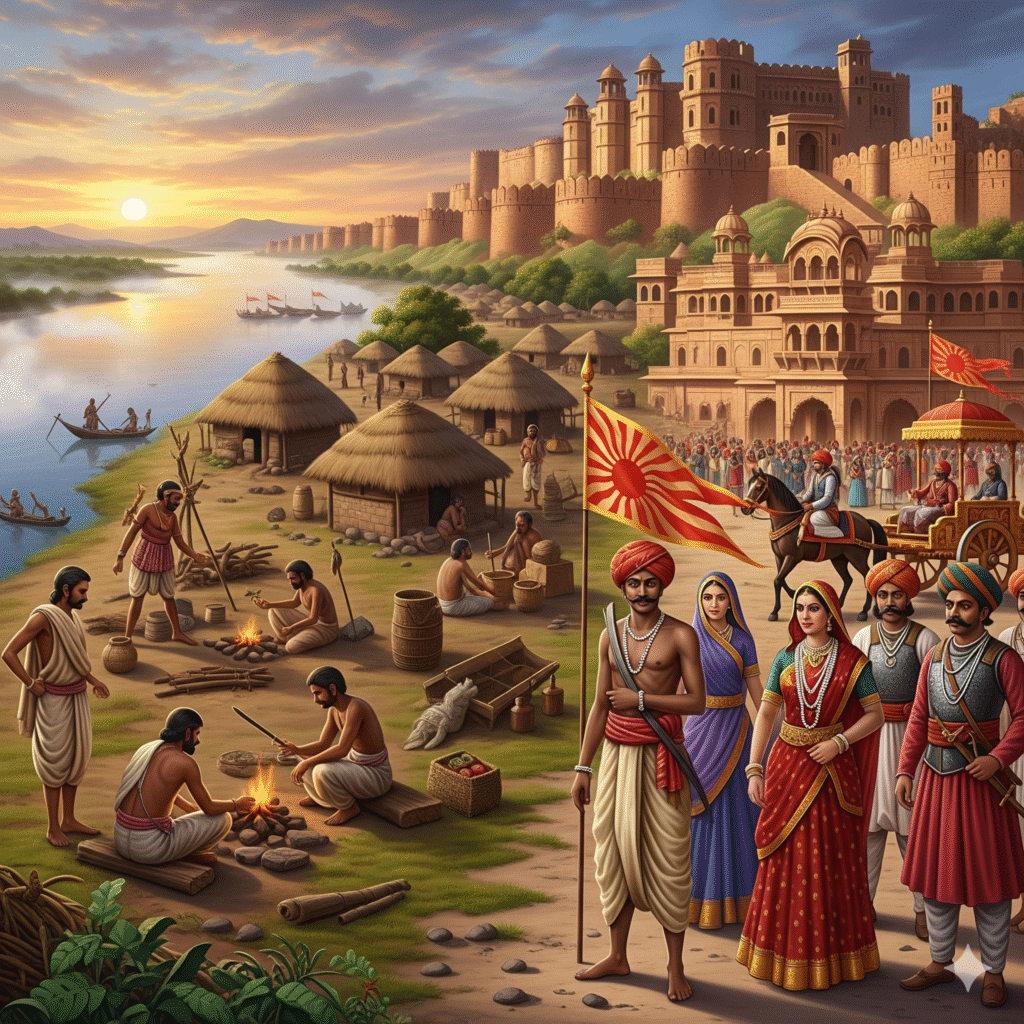
The city’s origins trace back to the 12th century when the Hada chieftain, Rao Deva, established the Hadoti territory. However, the city is famously named after a Bhil chieftain, Koteya, whom Prince Jait Singh of Bundi defeated in battle. The prince built the first battlement of the city, or ‘Garh’, over Koteya’s severed head, a symbolic act that marked the ascendancy of the Hada Rajputs. The Hada Chauhans, a sub-branch of the Chauhan Rajputs, were a regional power, but Kota itself was initially just a Jaghir (land grant) of the parent state of Bundi. A shrine to the defeated Koteya Bhil still exists within the City Palace, where the royal family continues to pay homage.
The Birth of a Kingdom
The Era of Rao Madho Singh
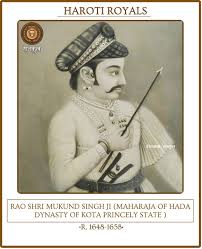
Kota’s transformation into an independent state began in the early 17th century when Bundi’s ruler, Rao Ratan Singh, gifted the principality to his second son, Rao Madho Singh. The independent state was officially established in 1631 when the Mughal Emperor Shah Jahan recognized Rao Madho Singh as its ruler, rewarding his military prowess. This unique dual recognition from both its parent state and the Mughal authority allowed Kota to grow in power and wealth, eventually surpassing Bundi. Rao Madho Singh also strengthened the city’s fortifications and commissioned the construction of the City Fort Palace.
Chronicle
Political Power and Diplomacy
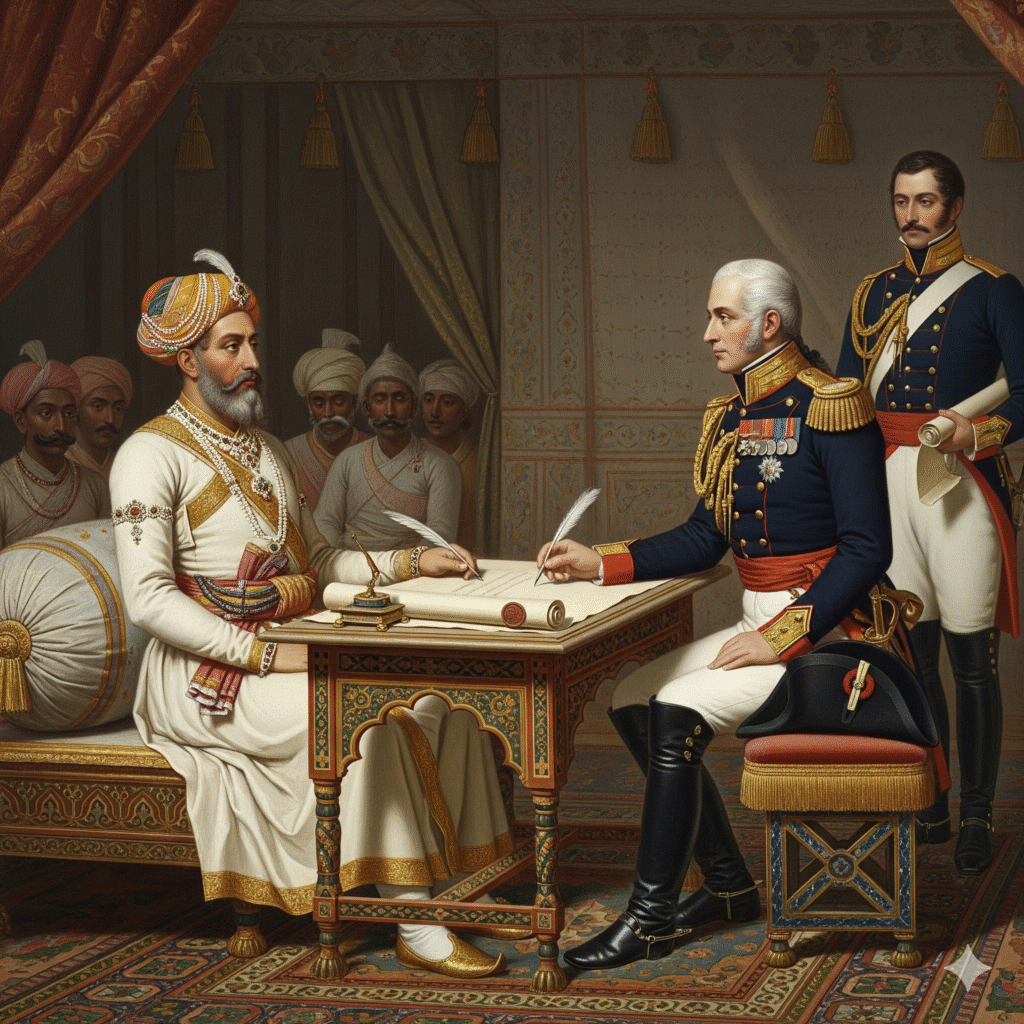
Over the centuries, Kota’s rulers consolidated their power. Maharao Bhim Singh was the first in his dynasty to be given the title of ‘Maharao’ and held a high position within the Mughal hierarchy. The most influential figure was Regent Zalim Singh, a master diplomat and administrator known as the “Machiavelli of Rajwarra.” He shrewdly manipulated neighboring states and implemented sweeping reforms, including modernizing the military and creating a new revenue system. His diplomatic genius led Kota to be one of the first Rajput states to sign a treaty with the British in 1817, securing an unprecedented agreement to carve out a separate kingdom, Jhalawar, for his descendants. The treaty brought Kota under British dominance by 1818, and the state remained a princely state until it merged into the new state of Rajasthan in 1948, which assumed its present form in 1956.
The Uprising of 1857
Kota’s Unprecedented Rebellion
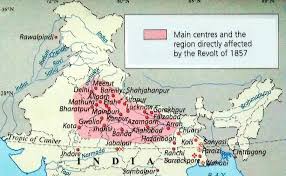
Unlike many other states that remained loyal to the British, Kota was the site of the most intense and sustained rebellion in Rajasthan during the Indian Uprising of 1857. Led by officers Mehrab Khan and Lala Jaydayal Kayasth, the revolt began on October 15, 1857, and led to the killing of British resident Major Burton and his sons. The revolutionaries held control of the city for six months until British forces, with the help of Karauli Maharaval Madanpal, crushed the rebellion on March 3, 1858. The two leaders were subsequently hanged
The Enduring Legacy of Art and Architecture
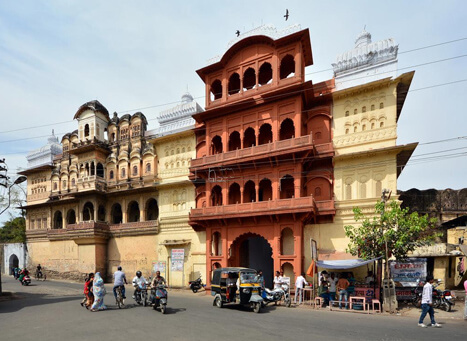
Kota’s cultural legacy is seen in its architecture and art. The Kota Garh City Palace is a masterpiece that blends Rajput and Mughal styles. Unlike other palaces, it was designed on an “intimate scale” to foster familial bonds. Key features include the Bada Mahal with its stunning murals and the Jantar Burj, a battlement that also served as an astrological instrument. Another significant architectural gem is the Jagmandir Palace, a beautiful red sandstone structure located on an island in the Kishore Sagar Lake, built in 1740 A.D. by a queen of Kota.
Kota is also famous for its school of miniature painting, the Kota Kalam, an offshoot of the Bundi school. It is renowned for its energetic and detailed hunting scenes with a sense of “magical realism.” The paintings realistically depict the rugged local landscape and portray wildlife, especially tigers and elephants, in a powerful, ferocious manner, which is a departure from other Indian art forms.